
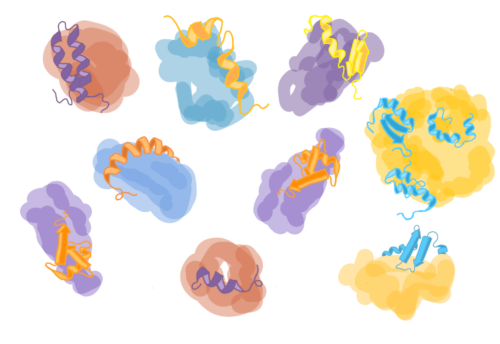
For decades, designing proteins to bind to specific targets has been a difficult process, with low success rates requiring extensive experimental screening. Traditionally, structural biologists have to go through hundreds to thousands of designs just to identify a small number of usable proteins. Now, a recent study has proposed BindCraft: an automated, open-source computational pipeline that harnesses the protein-folding predictor AlphaFold2 to design functional protein binders from scratch. Unlike past approaches, BindCraft executes the design process in a single computational step, predicting and optimizing binder targets directly within the AlphaFold2 framework. This method marks a shift from labor-intensive trial-and-error to a powerful, computationally guided framework for generating binders with much better efficiency.
Before BindCraft, the odds of a successful de novo (“from scratch”) protein binder design were incredibly low—one in a hundred thousand, perhaps. “You would have to design quite a lot of proteins to get some sort of hit,” said Martin Pacesa, a postdoctoral associate at the Swiss Federal Technology Institute of Lausanne. It’s obvious that previous screening methods were slow, expensive, and anything but a guarantee of generating functional binders.
Pacesa and his collaborator Lennart Nickel, a doctoral student, wanted to change that. “We didn’t want to do screening because it’s a lot of work,” Paseca said. This motivation led them to create BindCraft, which achieved a surprising seventy percent binding success rate in initial tests.
BindCraft builds on the remarkable predictive power of AlphaFold2, an artificial intelligence system used for the prediction of three-dimensional structures of proteins. Instead of testing thousands of random sequences, the pipeline uses a process called “hallucination,” named because it evaluates imaginative sequences and thinks about whether they could potentially fold and bind to resemble the protein of interest. The initial guesses usually look disordered, but promising fragments that match favorably with the target protein are identified, preserved, and iteratively refined until the entire sequence converges into a stable structure that fits the target protein.
“It’s not a single residue, but rather you kind of adjust the information over the whole sequence,” Nickel said. “Ultimately you merge toward a few residues per position, and the model tries combinations it thinks are the optimal sequence.” In other words, BindCraft doesn’t just tweak proteins one amino acid at a time, but rather rewrites the entire sequence in a coordinated way, letting AlphaFold guide it towards combinations that are most likely to produce a stable and functional binder.
The team has already demonstrated the diverse applications of BindCraft. In one case, they designed binders that neutralize allergens by binding to allergenic proteins. They also showed that BindCraft could regulate gene-editing enzymes such as Cas9 and engineer viral shells to deliver therapies only to specific tissues using these approaches. “In gene therapy, viruses usually go everywhere in the body, so you need a lot more material and face off-target effects,” Nickel said. This makes retargeting them a powerful strategy for improving both therapeutic precision and safety.
Even with its powerful applications, BindCraft isn’t perfect. Sometimes, the pipeline “outsmarts” its users by rejecting target sites that it doesn’t like. If a researcher picks a weak binding site, the algorithm may ignore it and redirect the binder to a more favorable site. “It’s too smart for its own good,” Pacesa joked. Another limitation is that while BindCraft excels at protein-protein interactions, it is still not applicable to designing binders for DNA, RNA, or other small molecules.
Nonetheless, BindCraft holds immense potential in drug discovery. BindCraft’s ability to generate peptide binders with high success rates offers companies quick starting points for novel pharmaceutical development. The team is currently working on a second version, which may expand to antibody fragments and other therapeutically relevant molecules. However, since de novo proteins are entirely new, researchers cannot predict how the human immune system will respond to them, requiring large-scale studies before BindCraft-designed proteins enter the clinic.
BindCraft represents a turning point for the field of protein design. Rather than utilizing inefficient screening methods, scientists can now generate functional binders relying on modern technology, often with remarkable accuracy. BindCraft represents the forefront of the quickly evolving field of de novo protein design.