
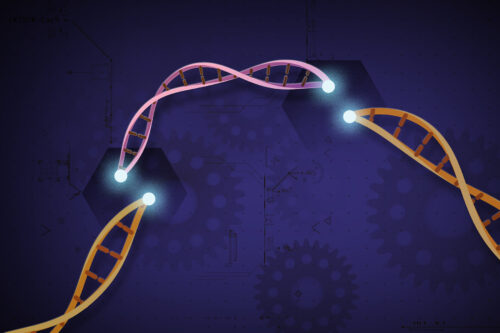
Gene editing is often heralded as the future of medicine. CRISPR–Cas9 is revered for its innovative ability to edit DNA. So what’s the catch? Editing DNA is like altering the blueprint in real time: every mark leaves a trace, and every mistake can be detrimental. These permanent marks become heritable and, simply put, cannot be undone.
Thus, attention has turned to RNA editing. RNA is the temporary messenger that carries instructions from DNA to make proteins. Change RNA and you can alter the results without ever touching the master blueprint.
The problem? RNA-editing tools have ranged from clumsy to downright toxic to cells. The widely used Cas13 not only cuts its target, but also healthy RNA molecules nearby. Such collateral damage has hindered the advancement of RNA-based therapies.
However, a Yale research team may have found a solution. In a study published in Cell, Ailong Ke, a professor of molecular biophysics and biochemistry at Yale, reported that a long-overlooked ancestor of Cas9, called IscB, hides a surprising ability—it can target RNA directly. The novel platform, which the researchers call R-IscB, can modulate RNA splicing, correct single-letter errors, or cut out defective sections altogether. In tests, it outperformed Cas13 while exhibiting no signs of toxicity.
For Chengtao Xu, a postdoctoral associate at Yale and the study’s first author, the balance between precision and safety is what makes R-IscB so promising. “On the DNA level, it is always a fascinating field, but off-targeting and safety issues are always there,” Xu said. “For RNA, we can claim it is safer, even if the edits are transient. DNA editing might only require one shot, but it risks permanent changes. RNA editing may need repeated treatments, but it offers a much safer exchange.” Xu described this balance as a constant trade-off that may soon become a very real point of contention for patients and consumers.
Looking ahead, Xu is most excited to see R-IscB tested against neurodegenerative diseases such as Alzheimer’s disease and Huntington’s disease. “Some of them are related by mis-splicing of the mRNA, some of them are caused by abnormal mRNA repeats. We can fix this at the RNA level without ever touching the genomic DNA,” Xu said. Xu also sees potential applications in muscular diseases such as Duchenne muscular dystrophy and spinal muscular atrophy, where even partial recovery of healthy RNA could make a meaningful therapeutic difference. Ke’s team is now pursuing collaborations with the Department of Neuroscience to bring these possibilities closer to reality.
Their work underscores how breakthroughs in science often emerge from the most unexpected avenues. As Xu reveals, this work began as a side experiment that has now uncovered a tool that could reshape the future of gene therapy. For patients whose diseases trace back to tiny mistakes in their genetic messages, this accidental discovery may one day mean the difference between sickness and health.