
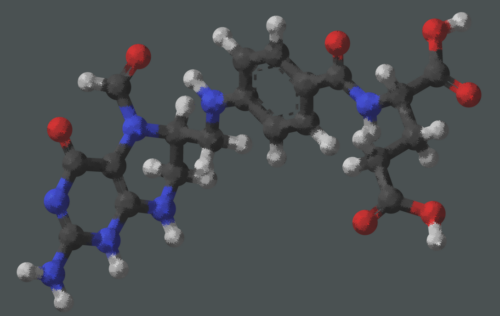
Leucovorin is a derivative of vitamin B9 (folate) that is typically administered as a “rescue agent” to mitigate the toxic side effects of chemotherapy drugs such as methotrexate. Powerful chemotherapy drugs accomplish their goal targeting cancer cells, but they can also damage healthy cells in the process. Leucovorin mitigates the negative side effects because it “rescues” healthy cells by replenishing their folate stores.
Recently, however, US Secretary of Health and Human Services Robert F. Kennedy Jr. has been advocating for another use for leucovorin: as a treatment for autism spectrum disorder (ASD). At a September press conference, Kennedy and President Donald Trump announced a plan to make leucovorin the first FDA-recognized treatment pathway for ASD.
While the idea of “curing” autism has generated hope among some families and controversy among disability rights advocates, researchers caution that evidence for the feasibility of a “cure” remains limited. Trump and Kennedy cited several small-scale studies proposing that leucovorin may improve verbal communication among children with cerebral folate deficiency (CFD)—a condition in which folate fails to reach the brain, causing developmental delays and ASD-like behaviors.
One meta-analysis found that about thirty-eight percent of autistic individuals also show signs of CFD, suggesting a possible overlap between the two conditions. The most common cause of CFD is the presence of folate receptor alpha autoantibodies (FRAAs), which prevent folate from binding to cellular receptors. Some studies suggest that children with ASD who also have high FRAA levels may respond more strongly to leucovorin.
Still, these findings are only applicable to a subset of people. Not everyone with ASD has CFD, and not everyone with CFD is FRAA-positive. Large, randomized trials of leucovorin as a treatment for ASD or CFD—which would provide the crucial information that typically precedes FDA approval of new treatment routes—have yet to be conducted.
Furthermore, a major confounding variable in studying ASD is its varied presentation across individuals. “Essentially, there are many autisms,” said Yann Poncin, Associate Professor at the Yale Child Study Center explained. There is Level 1, which some may refer to as “high functioning autism,” and Levels 2 and 3, which indicate that an autistic individual may require greater support. “If you’re doing any study with autism, you really need to identify exactly what you’re studying,” Poncin said.
To date, the FDA has approved leucovorin only for CFD, not for autism. Treating CFD with leucovorin would indirectly make the drug available to many autistic individuals. This fast-track approach could help the Trump administration claim progress toward ending what they identify as a national “autism epidemic,” though this term has not been adopted by medical professionals or experts in the study of autism. In the press conference, Trump administration officials noted that ASD diagnoses have risen by about four hundred percent since 2000. Yet, evidence suggests that this increase in ASD prevalence is primarily due to its broader diagnostic criteria and increased awareness.
Leucovorin’s unproven efficacy in treating autistic symptoms has raised concerns among medical professionals and scientists over the FDA’s side-stepping typical rigorous processes for drug approval.
By tying medical policy to political goals, experts warn, science risks being overshadowed by ideology. “Families sometimes are very desperate to find an explanation for their child, especially if that child is nonverbal,” Poncin said. “There is a lot of pressure to grab at things that seem effective.” This also risks oversimplifying what is, in reality, a complex, multifaceted condition.
Additionally, researchers argue that the Trump administration’s push to “cure” ASD reinforces a view of ASD as something inherently wrong or defective, when, in fact, ASD is a natural variation in human neurological functioning. “Those with lived experience of having autism don’t view it as a condition that needs to be treated. It’s their personality. It’s who they are,” Poncin said. Traditional evidence-based treatments for ASD focus on behavioral and social support, not on reversing autism itself. One long-standing method is applied behavior analysis (ABA), which reinforces positive behaviors and reduces the occurrence of harmful ones. However, ABA has faced growing criticism for being overly prescriptive. “Some people with autism think that ABA is a little too coercive,” Poncin said. “Most treatments are for comorbid conditions like depression, not the autism itself.” As the notion of “treating autism” grows increasingly unpopular among the ASD community, mainstreaming leucovorin likely will not alter this paradigm.