
Alzheimer’s disease and cancer are some of humanity’s biggest killers. Neither has a cure. Yet evidence indicates a strange relationship between the two: patients with a history of cancer are significantly less likely to develop Alzheimer’s. This puzzling correlation has long stumped scientists, but a new study in Cell by a team at Huazhong University of Science and Technology, led by Youming Lu, may have uncovered the cause.
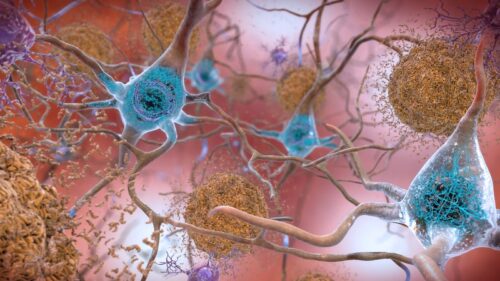
Alzheimer’s disease is marked by progressive cognitive decline, memory loss, and eventual degradation of bodily functions. One of its key features is the accumulation of misfolded proteins in the brain, known as amyloids, which can aggregate into plaques that harm brain function. Lu’s team proposes a pathway through which peripheral tumors prevent amyloids from clumping together, slowing the progression of Alzheimer’s. “This study provides mechanistic insight into the relationship between cancer and Alzheimer’s disease neuropathology,” said Tamar Gefen, the clinical co-director of the Alzheimer’s Disease Research Center at the Feinberg School of Medicine at Northwestern University.
To conduct their experiments, researchers used mice as a model organism. They introduced genetic mutations to induce Alzheimer’s disease, and then injected cancer cells to introduce tumors into peripheral tissues like the prostate, colon, and lungs. By measuring the number and size of tumors and amyloids at different stages, the researchers determined that the presence of tumors inhibited amyloid plaque formation and degraded existing plaques. Critically, it’s not the tumors themselves that stop the amyloids from clumping—it’s the proteins that these tumors release. The scientists observed the exact same effect when tumor proteins were injected into cancer-free mice.
Why do cancer and Alzheimer’s, two seemingly unrelated conditions, interact with one another? The researchers found an answer in cystatin C, a small protein found throughout the body. When cystatin C is secreted by peripheral tumors, it crosses the blood-brain barrier, the gatekeeper to the central nervous system. This gives it access to the brain, where it binds to amyloid aggregates and prevents them from clumping into toxic plaques. Additionally, cystatin C activates immune cell signaling receptor TREM2, which galvanizes the immune system to release an inflammatory barrage of amyloid-destroying proteins. “The finding that peripheral cancer can deplete amyloid pathology is not only helpful to understand why a history of cancer and Alzheimer’s progression are inversely related; it has the potential to expand the focus from purely anti-amyloid treatments to inflammatory targets,” Gefen said.
There is still a long way to go before the study’s findings might lead to a drug for patients with Alzheimer’s. “It will be critical to run adjacent studies in human models and clinically characterized post-mortem human brain samples,” Gefen said. However, if future studies confirm these findings in the human body, this work could mark a unique shift in the direction of Alzheimer’s treatment, expanding our idea of Alzheimer’s from a brain-only disease to one influenced by the whole body.