
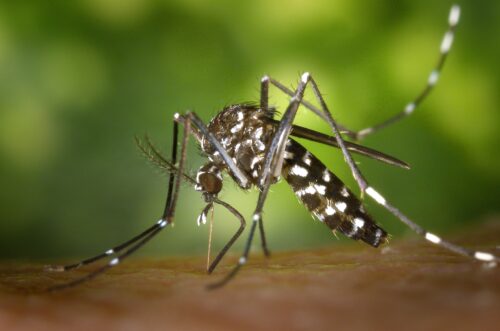
The skin is the largest organ in the body and is indispensable for our protection against environmental hazards. Some pathogens, however, are able to transgress this natural barrier through the feeding behavior of one of mankind’s most bothersome pests: mosquitoes. As vectors of debilitating zoonotic diseases such as malaria, Zika, and yellow fever, mosquitoes put our immune system to the ultimate test.
The immune system is regulated by circadian rhythms, which are controlled by a set of core clock genes. A study published in iScience led by Hamidah Raduwan, an associate research scientist at Yale, sought to identify how daily oscillations in core-clock gene expression underlie the body’s response to mosquito bites. In other words, does the time of day influence our immune system’s ability to bite back?
Raduwan and her team focused on the core-clock gene BMAL1, which is thought to play an important role in the skin’s immune response. “BMAL1 undergoes a negative feedback loop: BMAL1 expression activates the clock, and once it reaches a threshold, it deactivates the clock, allowing for the control of cutaneous gene transcription throughout the day,” Raduwan said.
The researchers first confirmed the baseline patterns of BMAL1 expression in mice, a nocturnal species with circadian rhythms opposite to those of humans. Tissue biopsies, followed by RNA analysis, confirmed a normal internal clock in the mice, with BMAL1 expression highest at dawn and lowest at dusk—times when mosquitoes are most active. However, mice that were bitten by mosquitoes at different times–dawn and dusk–showed very different responses. Compared with dawn mice, dusk mice showed a drastic increase in BMAL1 levels after twenty-four hours. The result suggests a difference in immune response across the day. “These findings may be applicable in trying to figure out the timing of vaccination, as the ideal time to vaccinate is when the immune response is most robust,” Raduwan said. The time-dependency of our immune system may explain why the next time you get a mosquito bite, you may or may not experience a terrible itch.