
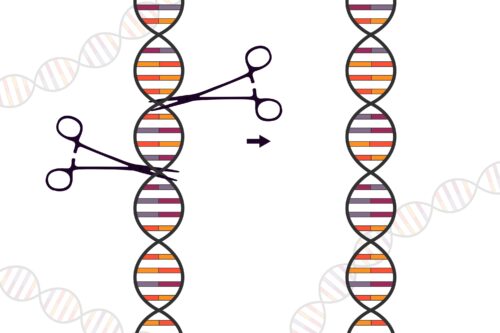
Recreating dinosaurs, making mutant superhumans, even generating super-bacteria—popular culture often portrays gene editing as a magical, ultra-powerful phenomenon. In reality, the CRISPR-Cas9 system, developed by Jennifer Doudna, uses targeted guide RNAs and the Cas9 enzyme as “molecular scissors” to cut out or insert specific sections of DNA. In the past decade, this technology has become widespread not only for sci-fi-esque direct editing of the genome but also for basic scientific research. Recently, a team of Yale researchers, led by new faculty member Susan Gueble and including professors Seth Herzon and Ranjit Bindra, pioneered a CRISPR-based approach published in Nucleic Acids Research Cancer to understand DNA damage mechanisms in cancer.
Mutations affecting DNA damage repair and response (DDR) genes are a hallmark of cancer, and recognizing them is critical for a better understanding of cancer and possible avenues for treatment. “We wanted a higher throughput way to look at a larger group of molecules and understand how they interact with various DNA repair pathways,” Bindra said. To this end, the Yale team developed a library of 353 DDR genes, which they utilized in targeted CRISPR-knockout screening. Knocking out these genes using CRISPR enabled rapid investigation of numerous DNA-damaging agents (DDAs) and assessment of their relationships with DDR pathways.
The Yale team used this library to screen a panel of fifteen DDAs, five of which had not previously been interrogated, revealing novel gene-drug interactions and emphasizing substantial differences among DDA classes in their interactions with DDRs. Of course, this is nowhere near the end. “We want to use this platform to really start interrogating other small molecules in a higher throughput manner and to understand how to make molecules even more selective for specific DNA repair pathways,” Gueble said. This could enable the screening of potential cancer mechanisms and the development of treatments on a scale larger than ever before—a significant advancement in cancer research.