
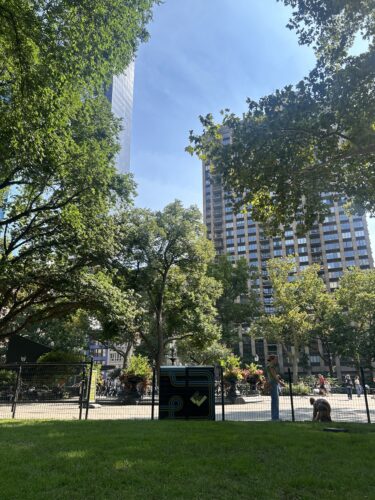
Spring phenology—the timing of plant life-cycle events like leaf budding and leaf color changes—is a critical indicator of climate change impacts on urban ecosystems. In New York City parks, global warming has delayed the start of the growing season, marking a shift from earlier to later spring onset. In a recent study, scientists at the Yale School of the Environment explored these patterns by analyzing two decades’ worth of high-resolution satellite imagery.
One key factor shaping these warming trends is park size. “Larger parks have sufficient cooling capacity to counteract the warming effect, but medium-sized parks do not to the same extent,” said Juwon Kong, a postdoctoral associate at the Seto Lab. This is because medium-sized parks have high edge-to-area ratios, which limit the interior buffer zone that is meant to protect the vegetation from non-green surfaces. Other park elements, such as built infrastructure like buildings and roads, also contribute to milder winters.
Within medium-sized parks, trees require a sufficient winter chilling period—the minimum number of cold hours—before spring warming to trigger leaf development. However, due to the delay, chilling periods are shortened, necessitating greater heat accumulation to break dormancy. Thus, trees often remain dormant for longer despite rising temperatures, disrupting the normal timing of spring phenology.
These findings regarding delayed springs can drive efforts to preserve urban biodiversity despite the challenges posed by climate change. For ecologists and urban planners, the weakened synchrony between winter and spring could also mean having to combat additional issues like reduced carbon uptake and shifted allergy and pollen seasons, further amplifying the stakes.