
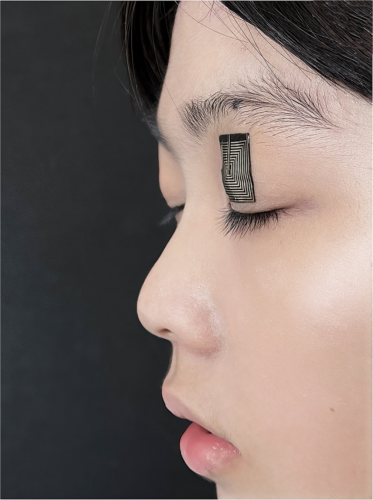
What if a simple blink could reveal how tired you are? In a recent study conducted at the University of California, Los Angeles (UCLA), the Bioelectronics Research Group developed a soft, waterproof bioelectronic sensor that can monitor fatigue in real time by tracking eyelid movements, an innovation that could be used to improve occupational safety and disease prevention.
Jun Chen, associate professor of bioengineering and senior author of the study, set out to design bioelectronics that could function reliably even when exposed to sweat and other biofluids. Soft, non-invasive bioelectronics often struggle to maintain performance under these conditions. Chen’s group, interested in developing bioelectronic devices for personalized and preventative healthcare, aimed to develop flexible, water-resistant bioelectronics to overcome this limitation.
“The working environment of bioelectronic devices is a high- humidity environment,” Chen said. “People wanted to increase the waterproofness of the devices. They usually use some encapsulation there. This kind of encapsulation will usually compromise the bioelectronic performance, like making it very bulky, reducing the sensitivity or energy efficiency, or other kinds of performance.”
With this in mind, Chen’s group at UCLA developed a fundamentally new platform technology in 2021 by leveraging a phenomenon called the giant magnetoelastic effect. In soft materials, this effect describes how a material’s magnetic properties change when it’s stretched or compressed. This means the device can turn physical movement into magnetic field changes, which can then be measured and analyzed.
Chen explained that most forms of energy, such as light or electricity, are easily disrupted in humid environments. Water can absorb or block light and heat, and it can also conduct electricity, causing signals to weaken or short out. “Magnetic fields are very different because magnetic fields are able to penetrate water,” Chen said.
In this fatigue monitoring project, the soft magnetoelastic device developed by the researchers has several unique attributes. It is self-powered, harnessing blinking motion to generate its own electrical signals, and noninvasive, resting comfortably on the outside of the eyelid. The sensor provides continuous fatigue measurement and is designed to operate within a closed-loop system, meaning it could also potentially be used to trigger feedback responses in real time. While this study focused on monitoring fatigue, the researchers integrated an electrical pulse generator into the system, which in future versions could deliver gentle electrical stimulation to help manage fatigue. Finally, the sensor is ultra- thin, ultra- soft, and ultra- stretchable, making it an ideal fit for the human eyelid.
The device works through a small sensor attached to the eyelid, which converts blinking motion into electrical signals. The sensor is made up of two layers: the magnetomechanical coupling (MC) layer and the magnetic induction (MI) layer. In this device, the MC layer reacts to the mechanical pressure created by each blink and converts that movement into magnetic field changes. The MI layer then transforms these magnetic changes into electrical output. Together, these two layers compose a soft magnetoelastic bioelectronic device that is both practical and user-friendly.
The discovery of the giant magnetoelastic effect in soft materials paves the way for new waterproof and biocompatible bioelectronic devices for healthcare and energy applications. Chen’s group has already implemented this technology for myriad uses, including sensors that monitor pulse waves and breathing patterns. Additionally, Chen’s group aims to develop this technology for human-machine interfaces, underwater haptic sensing, and diagnostic devices for Parkinson’s disease. The world of bioelectronics is wide, and this fatigue sensor is only the start.