
An empire, known to Indigenous peoples for centuries, “discovered” again. Tribal items taken as “loans” but never returned. Human remains dug up and shipped thousands of miles from their gravesites. For archaeologists and paleontologists of the nineteenth and early twentieth centuries, field ethics were often an afterthought—if they were considered at all. Many collectors justified their actions as contributions to scientific knowledge, believing that taking and studying items would serve the advancement of archaeology and anthropology, and similar fields. But attitudes have changed, and what were previously regarded as mere “objects” are now understood to hold cultural significance. A close examination of museum collections reveals injustices, nuances, and questions surrounding the acquisition of these artifacts. After reckoning with the complex history of collecting from native lands, it is crucial to reexamine intent, rebuild fractured relationships, and work to repair the damage done.
Ancient Artifacts
High on a mountain ridge in Peru, an American explorer named Hiram Bingham III searched for ancient ruins. Bingham, a professor of Latin American history at Yale, was on a mission to rediscover Vilcabamba, an ancient stronghold known as the “lost city” of the Incas. In 1911, Bingham and his local guides uncovered a remarkable array of stone structures on the mountain, seemingly confirming his theory. Later, Bingham found out that the ancient city was not Vilcabamba at all, but an Incan royal retreat known as Machu Picchu.
Though Machu Picchu was known to local farmers, most Peruvians were unaware of the site’s existence. According to Richard Burger, the Charles J. MacCurdy Professor of Anthropology at Yale, the Inca Empire was the equivalent of South America’s Roman Empire. At its height, over one hundred thousand people lived in Cusco, the capital, and the empire spanned from central Chile to Ecuador.
Funded by Yale and the National Geographic Society, Bingham led the Yale Peruvian Expedition on two subsequent trips to Machu Picchu. The goals of these trips were to excavate, survey, map, and collect. Bingham was not a trained archaeologist, nor did he bring one with him on the expedition, but he instructed his team to collect as many items as possible. He even hired local informants to locate “valuable” sites. Artifacts included human bones, mummies, pottery, and jewellery. The expedition shipped over four thousand items to the US, where they were placed in the Yale Peabody Museum. Bingham went on to become a US senator for Connecticut, while the precious artifacts and remains he collected in Peru remained in the Peabody for a century.
The Return of Regalia
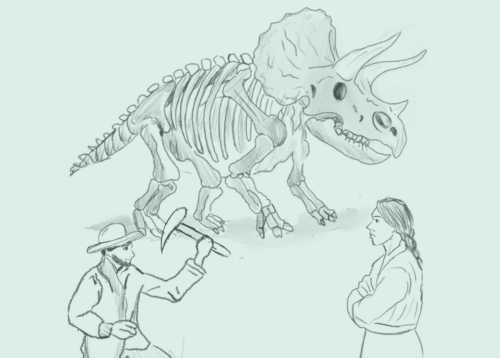
Bingham’s Machu Picchu expedition was just one chapter in the longer, often fraught history between Yale researchers and Indigenous communities. Decades earlier, in the 1870s, O.C. Marsh, a prominent paleontologist from Yale, set course for Nebraska. His expedition included Yale College students, Army scouts, and Pawnee scouts—members of a Native American tribe historically at odds with the Oglala Lakota Sioux, whose land they trampled on. Marsh’s band pillaged rodent and bird fossils in and around the Green and White rivers, at times interfering with burial practices and removing skulls from buried tribe members’ bodies. By the end of the expedition, the party had collected five tons of fossils and other artifacts for the Yale Peabody Museum.
But Marsh wasn’t finished. In 1874, during an expedition in the Black Hills of Dakota territory, Marsh contacted Chief Red Cloud of the Oglala Lakota to obtain permission to survey the land. According to Lawrence Bradley, a geology professor at the University of Nebraska Omaha, Marsh invited the Chief to a feast, sharing rations with the half-starving tribe to coerce them into giving permission for the expedition. Marsh was given the green light, and cultural extraction commenced. Red Cloud’s personal items, including a headdress, moccasins, and other regalia, as well as fossil bones from the Black Hills made their way into the possession of the Yale Peabody Museum. According to Bradley, who has indigenous roots and was raised by Lakota , skeletal items are sensitive in Lakota culture. “Fossils and human bones are taboo. You don’t go near and you don’t touch them,” Bradley said.
As a doctoral student, Bradley was able to gain access to some collections, but not all of them. Diving deeper into the field, Bradley began to realize the sheer scale of the collections taken from native land was gargantuan. “We’re talking drawer after drawer, cabinet after cabinet, room after room, sometimes floor after floor,” Bradley said. Some universities would make up excuses to prevent him from accessing their archives. Eventually, he resorted to asking state senators through the Freedom of Information Act and asking college newspapers to put pressure on administrators to allow him access to the archives.
Collecting Bodies for Science
The practice of taking human remains from Indigenous lands wasn’t limited to Yale. As the US expanded its territory westward in the early nineteenth century, settlers and archaeologists routinely desecrated Native American burial sites. Human remains and funerary objects ended up in natural history museums across the country, where many are still held today.
But why? According to Elaine Ayers, a lecturer in the History of Science, Medicine & Public Health at Yale, the boundary between natural history and anthropology has not always been so clear. “Natural history collectors would have collected things like human skulls, human remains, cultural artifacts, and anthropological artifacts partly to classify races throughout the late eighteenth and nineteenth centuries,” Ayers said. For instance, these artifacts were used in the now-debunked science of craniometry, the measurement of human skulls to judge the intelligence of different races. Such practices helped construct racist hierarchies meant to justify and reinforce white supremacy. Not all scientists set out with the goal of collecting human remains, but sometimes, in the process of excavating sites, they would collect bones they found for use in these practices.
In response to this history, the US federal government enacted the Native American Graves Protection and Repatriation Act (NAGPRA) in 1990. NAGPRA requires federally funded institutions to make Native American, Alaskan, and Hawaiian human remains, funerary objects, and other sacred cultural artifacts available for repatriation to their respective tribes or lineal descendants. While the creation of NAGPRA was a step in the right direction, it has some limitations. NAGPRA only applies to items taken from federally recognized tribes in the United States, even though federal recognition is a recent, and as some argue, colonial construct. And because NAGPRA’s jurisdiction stops at US borders, items collected from outside of the US, like the remains taken from Machu Picchu, are not covered by NAGPRA.
The Future of Repatriation
In the years after the Machu Picchu expeditions, the Peruvian government made increasingly urgent requests for the artifacts to be returned, but Yale refused to budge. Decades passed before Peru asked again in 2001, but to no avail. In 2003, Burger and his wife, Lucy Salazar, launched a traveling exhibit that brought the Incan items across the US. However, tensions came to a head in 2008, when the government of Peru filed a lawsuit. Yale was forced to give in, establishing a joint research center and museum in collaboration with the University of Cusco in Peru, where the items were finally returned in 2011. However, many of the Lakota items are still in Yale’s possession. “Like any of the cultural items that fall under purview of the Native American Graves Protection and Repatriation Act, the items attributed to Red Cloud are slated for consultation. As of now, we have not received a formal request for these belongings,” a spokesperson for the Peabody Museum said.
According to the ProPublica NAGPRA database, the Yale Peabody Museum still has at least four hundred Native American human remains. In 2022, Hiʻilei Hobart, a professor of Ethnicity, Race, & Migration at Yale, learned of Native Hawaiian remains being held in the Yale Peabody’s collections. These iwi kūpuna, or ancestral remains, had been separated from a larger collection that was repatriated in 2014. When Hobart found out about the iwi, she reached out to Halealoha Ayau, a Native Hawaiian repatriations expert. Together with a team of Yale students, Hobart brought the iwi to Vassar College, where Ayau was visiting, and handed them over in a repatriation ceremony. “Completing these processes in a culturally significant way is important, as a Native Hawaiian person at Yale” Hobart said.
Repatriation is typically a slow, complicated process. Determining the provenance of items can be challenging, especially when collectors did not record the origin of the items. Different communities also have different views on the keeping of human remains in museums. In either case, making human remains available for repatriation is critical to repairing the relationships between natural history museums and Indigenous people.
In the case of the fossils collected from Lakota lands, more needs to be done to recognize their ties to Indigenous communities. Today, many of these centuries-old items sit in museum collections with generic labels that do not include the tribal territories from which the fossils were removed. “Many times, the identification tag would say a certain county. But rarely did it ever say that county was within a Native American reservation,” Bradley said. Acknowledging their origins gives power and voice to the land and people who have otherwise been voiceless.
Rebuilding Trust
From the Lakota land to Machu Picchu, history has demonstrated time and again that what happened in the past cannot be reversed, but wrongs can be righted. As experts and advocates continue to improve collecting practices—obtaining permission from tribal leaders, considering the purpose and exigence for collections, and understanding their collecting in a greater context—a roadmap for the future is becoming clear.
There are avenues that institutions like Yale’s Peabody Museum can take. Institutions that possess fossils collected from tribal lands can do their part in acknowledging where and how such specimens were acquired. Acknowledging a tribe by name gives power to the people from whom items were taken. Institutions can also involve Indigenous communities in their practices, whether via educational initiatives or collaborative projects. “What I would like to see built into regular practice is, first and foremost, consultation with the Indigenous peoples within the institution, as they’re moving through these various processes,” Hobart said. Indigenous communities around the world are still very much here. Now, it is time for them to have a seat at the table.