
For patients with rare genetic disorders, the diagnostic
journey can often feel uncertain and frustrating.
Meier-Gorlin syndrome (MGS), a form of primordial
dwarfism, is one such disorder. Since its first description in
1959, fewer than 150 cases have been reported worldwide. The
rarity of MGS has made it difficult to understand its cause.
How can genetic mutations produce such strange skeletal and
developmental abnormalities?
Recently, researchers at Yale directly investigated how
MGS-associated mutations disrupt an important step in DNA
replication. During the first phase of the cell cycle, proteins
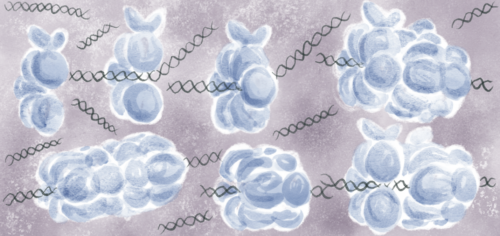
load a piece of biological machinery called the MCM2-7
helicase onto special sites in our DNA. Imagine MCM2-7 like
the head of a zipper, ready to gently unwind the DNA so it can
be read and copied correctly. The attachment process, called
origin licensing, is crucial for ensuring DNA is replicated
correctly. In a study published in the Journal of Biological
Chemistry, Ran Yang, a graduate student in the Bleichert Lab
in the Department of Molecular Biophysics and Biochemistry,
analyzed MGS mutations to determine precisely where these
variants disrupt origin licensing. “What made it possible to
tackle this question was a fully reconstituted human MCM
loading system in vitro,” Yang said. “By comparing MCM
loading efficiency between MGS variants and wild-type
proteins, we could directly assess how—and at which step—
disease variants disrupt origin licensing.”
Yang’s findings reveal how errors in the earliest stages of
DNA replication can have life-altering consequences for MGS
patients. As scientists continue to search for clues about the
underlying nature of rare genetic conditions like MGS, we
come closer to understanding how we might treat them.