
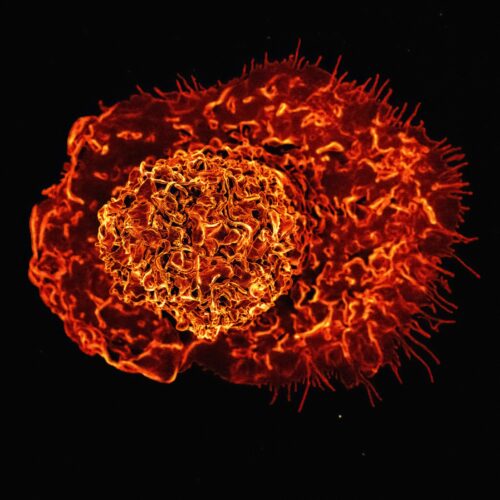
To most of us, the word “nanotechnology” brings to mind futuristic and unfathomable gadgets and gizmos, whether it be the nano-bots from Big Hero 6 or an abstract nano-virus from I, Robot. However, at Tsinghua University, researchers have engineered a system that combines the body’s innate immune system with drug-loaded nanoparticles to deliver therapeutics directly to the brains of stroke patients.
Traditional drug delivery is often quite inefficient. When you take a pill or get an injection, the drug enters your bloodstream and travels throughout your body to get to its proper “target.” In the process, the human body often degrades much of the drug, and widespread travel introduces the risk of “off-target” side effects. Drug delivery to the brain is especially difficult due to the blood-brain barrier, which tightly protects it, thereby reducing the efficacy of many otherwise promising therapeutics. Nanoparticles, which are particles between one and one hundred nanometers, can be given unique properties through surface modification, making them an enticing option for drug delivery systems. “Generally, nanoparticles can alter the pharmacokinetics for more distribution and the retention of therapeutics inside the body,” said Xianzhi Zhang, a postdoctoral associate in Yale’s Department of Biomedical Engineering.
The team at Tsinghua created albumin-based nanoparticles and loaded them with a promising neuroprotective drug for stroke recovery. These nanoparticles were administered through intracalvariosseous (ICO) injection, directly into the bone marrow of the skull, where they were taken up by a special type of immune cell called a calvarial myeloid cell. These immune cells can completely bypass the blood-brain barrier and migrate directly towards damaged brain tissue, making them the ideal carriers for drug-loaded nanoparticles.
After initial mouse trials, the scientists determined that their nanoparticle ICO injection produced the best results, outperforming traditional intravenous injection by a factor of only one-fifteenth of the dose. Additionally, the nanoparticle ICO injection remained more concentrated in brain tissue than a standard ICO injection, highlighting the importance of nanoparticles for targeted delivery. “This ICO injection is not commonly used,” Zhang said. “But it’s so surprising to see how effective this strategy is to allow nanomedicines to get into the brain.”
In 2023, the technology was approved in China for a pilot clinical trial in humans, marking a promising beginning for the potential popularization of the ICO injection technique. Many drug delivery methods never make it that far in testing. “Even if it’s just a phase one clinical trial, which generally is more like a safety test, […] this work is very, very promising,” Zhang said. “This is so elegant, so straightforward, and all the materials they use are mostly approved.”
Although the original study published in Cell focused on nanomedicine for stroke alleviation, the research team is hopeful that their techniques can be generalized to other medications that rely on passing the blood-brain barrier, such as various cancer therapies that similarly hijack the immune system. It doesn’t seem far-fetched that other medicines could be loaded into nanoparticles and likewise injected and taken up by calvarial cells. “I feel like in the future, this ICO-related injection and similar strategies will be adapted to other diseases as well,” Zhang said.