96.1
Detecting the Undetectable
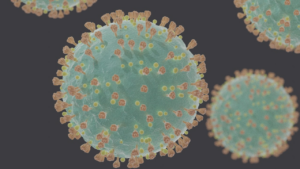
Image Courtesy of Wikimedia Commons. The emergence of the COVID-19 pandemic resurfaced the necessity for pathogenic surveillance––that is, the detection of emerging and unknown disease

Image Courtesy of Wikimedia Commons. The emergence of the COVID-19 pandemic resurfaced the necessity for pathogenic surveillance––that is, the detection of emerging and unknown disease

Image Courtesy of NIAID. While the world faces the novel SARS-CoV-2 virus, another pandemic continues to afflict nearly forty million people worldwide: human immunodeficiency virus

Understanding the historical prevalence of elements on Earth offers us insight into the processes that led to our planet’s development. One such group of elements
Image Courtesy of Pixabay. Understanding the historical prevalence of elements on Earth offers us insight into the processes that led to our planet’s development. One
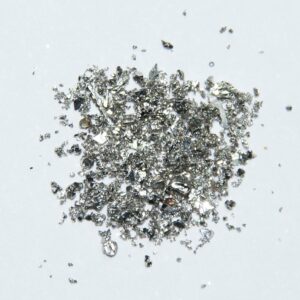
Anthropogenic pollutants—that is, those released by human activities—are toxic and can pose serious risks to human and ecological health. Chlorinated phenolic compounds (CPs), often used

Image courtesy of Wikimedia Commons. In scientific experimentation, some information is more attainable than others, by nature of the method of retrieval. For instance, clinicians

Image courtesy of Flickr. The environmental threats posed by fossil fuels, such as their rapid depletion and the climate change threats posed by their emissions,

After surgery, effective pain management is one of the most critical aspects of patient recovery. Treatment requirements can vary from person to person, leading to
A Promising New Desalination Technology
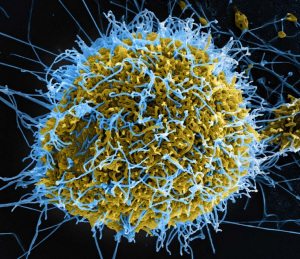
Scientists have recently been exploring the potential of utilizing the deadly Ebola virus as a potential treatment against brain tumors. Through testing three chimeric variations of the Ebola virus on severe combined immunodeficient (SCID) mice, it was found that the Ebola virus may be a safe and effective way to protect brain cells while killing tumor cells.
In chemical processes, catalysts are compounds that increase the rate while undergoing a cycle of structural changes. At the end of the reaction, the catalyst

In biological systems, iron-sulfur (Fe-S) clusters act as components of electron transfer proteins. These clusters occur in various different forms, including cubanes (4Fe-4S) and diamond